
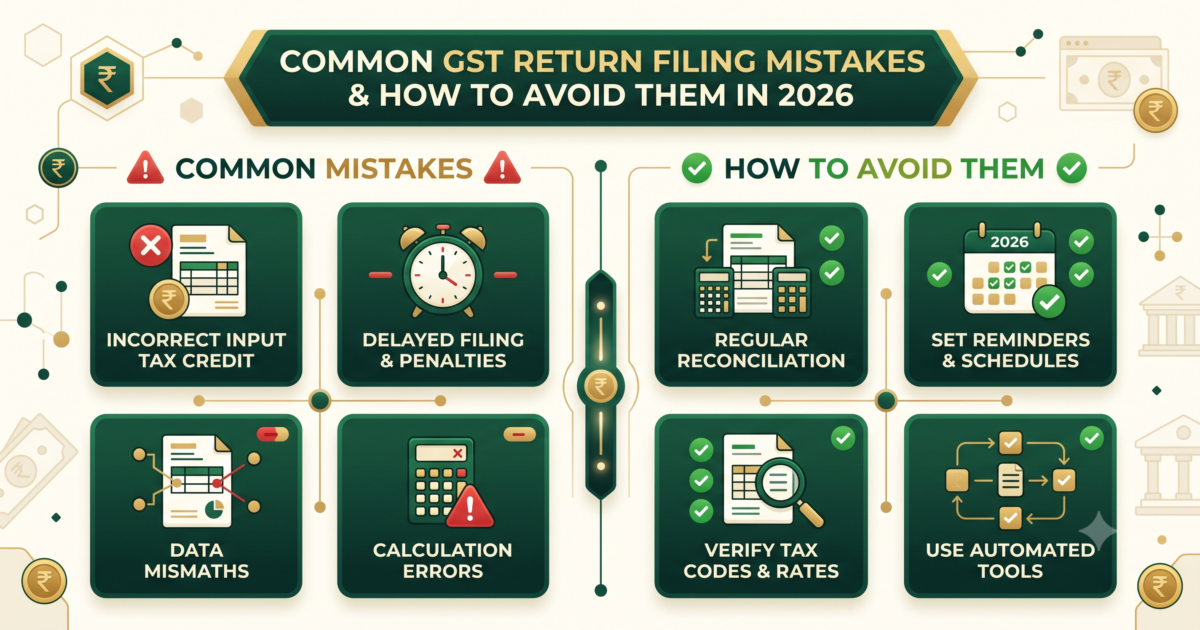
In the evolving landscape of Indian taxation, the Goods and Services Tax (GST) system has moved from a “voluntary compliance” phase to a highly automated, data-driven scrutiny model. As of 2026, the GSTN portal acts as a vigilant watchdog, instantly flagging inconsistencies between GSTR-1, GSTR-3B, e-invoices, and e-way bills.
For businesses, compliance is no longer just about meeting deadlines—it is about data hygiene. A single misstep in HSN classification or an unclaimed Input Tax Credit (ITC) can lead to automated tax notices, interest penalties, and blocked working capital.
This guide explores the most frequent GST filing errors in 2026 and provides actionable strategies to keep your business compliant and audit-ready.
1. The “Mismatch” Trap: GSTR-1 vs. GSTR-3B
The most common trigger for GST scrutiny notices is a discrepancy between GSTR-1 (Outward Supplies) and GSTR-3B (Summary Return).
- The Error: Businesses often prepare GSTR-1 based on detailed invoice data but file GSTR-3B using summary values calculated manually or via unverified spreadsheets. When these two datasets don’t align, the system flags the variance as tax evasion or under-reporting.
- The Fix:
- Monthly Reconciliation: Never file GSTR-3B without first running a system-generated “Tax Liability Comparison” report available on the GST portal.
- Automated Sync: Use accounting software that pushes data directly to the portal. Avoid manual data entry for GSTR-3B summaries; the system should auto-populate these based on your GSTR-1 filing.
2. ITC Lapses: The “GSTR-2B” Rule
In 2026, the era of claiming ITC based on internal purchase registers is over. If an invoice does not appear in your auto-generated GSTR-2B, you simply cannot claim the credit.
- The Error: Claiming ITC on invoices that haven’t been uploaded by the supplier or claiming “blocked” credits (e.g., personal expenses, construction materials, or catering services under Section 17(5)).
- The Fix:
- Reconcile Before Claiming: Always match your Purchase Register against GSTR-2B. If a supplier hasn’t filed, follow up immediately—withholding payments is a standard industry practice to force vendor compliance.
- Understand Blocked Credits: Maintain a master list of non-eligible expenses for your accounts team to ensure these aren’t accidentally marked as “eligible for ITC.”
3. HSN and SAC Code Errors
With stricter enforcement of HSN/SAC reporting, vague descriptions or generic codes are no longer acceptable.
- The Error: Using outdated HSN codes or broad, generic categories. The GST system now uses HSN-level validation; if your HSN code doesn’t match the tax rate applied, the system may flag your return for “inconsistent tax calculation.”
- The Fix:
- Update Your Master Data: Verify your product codes against the latest CBIC HSN master list.
- System Validation: Implement HSN-level validation in your invoicing software so the system automatically rejects entries that use expired or incorrect codes.
4. Reverse Charge Mechanism (RCM) Oversights
RCM is a frequent source of contention. Businesses often forget to self-invoice or pay tax under RCM for services like legal fees, sponsorship, or security services.
- The Error: Failing to pay the RCM tax liability or, conversely, failing to claim the ITC on RCM payments because the transaction wasn’t correctly tagged in the accounting system.
- The Fix:
- Tagging Transactions: Configure your ERP or accounting software to automatically flag vendors and expenses that trigger RCM.
- Automated RCM Summary: Generate an RCM-specific summary report before every GSTR-3B filing to ensure all liabilities are accounted for.
5. Ignoring Notices and Regulatory Deadlines
Perhaps the most dangerous error in 2026 is the “ostrich approach” toward GST notices.
- The Error: Assuming that if a return was filed “eventually,” the penalty doesn’t matter, or worse, ignoring a notice because it seems like a clerical error. The GST portal now imposes automatic late fees and, in some cases, blocks the filing of subsequent returns.
- The Fix:
- Portal Hygiene: Assign a dedicated team member to check the “View Notices & Orders” section of the GST portal weekly.
- Response Kits: Maintain a “Scrutiny Response Kit” containing reconciliations (Books vs. GSTR-2B vs. GSTR-3B). When a notice arrives, having this data ready turns a potential legal battle into a simple administrative reply.
The 2026 Compliance Checklist for Your Business
To ensure your business remains above the fray, implement this monthly routine:
| Action Item | Frequency | Purpose |
| GSTR-1/3B Reconciliation | Monthly | Avoid discrepancies in reported sales. |
| GSTR-2B vs. Purchase Register | Monthly | Ensure valid ITC claims and supplier compliance. |
| E-Invoice/E-Way Bill Sync | Real-time | Prevent document-level mismatches. |
| Vendor Compliance Audit | Quarterly | Identify non-compliant vendors early. |
| Portal Notice Check | Weekly | Avoid missing time-bound responses. |
Why Automation is Your Best Defense
In 2026, manual spreadsheet-based compliance is a liability. The tax department’s data analytics engine is faster than any human. By moving to cloud-based, GST-ready accounting software, you benefit from:
- Data Validation: Real-time alerts for invalid GSTINs or incorrect invoice structures.
- Auto-Reconciliation: AI-driven matching of your purchase ledger against the government’s GSTR-2B.
- Audit Trails: Every change made to an invoice or return is logged, providing a clear trail for future audits.
Final Thoughts: The Cost of Complacency
The 2026 GST regime is designed to reward the disciplined and penalize the negligent. While the administrative burden is high, the cost of non-compliance—ranging from 18% annual interest on delayed taxes to the potential suspension of your GSTIN—is far higher.
Do not view GST compliance as a back-office burden. Treat it as a fundamental part of your business operations. By digitizing your records, enforcing monthly reconciliations, and staying updated with the latest notifications, you protect your business’s cash flow and, more importantly, its reputation.
Disclaimer: This article is for informational purposes only and does not constitute professional tax or legal advice. GST regulations are subject to change; always consult with a certified tax professional before making significant compliance decisions.