
In the current economic climate of 2026, the term “financial security” has moved beyond buzzwords. With India’s headline CPI inflation hovering around 4% and healthcare costs consistently rising at an alarming 14% annually, the traditional advice of “save a little something for a rainy day” is no longer enough.
For the modern Indian family, an emergency fund is the single most important barrier between a life of structured growth and a sudden descent into debt. But as living costs evolve, so must your strategy. How much is truly “enough” in 2026?
1. Defining Your “Magic Number”
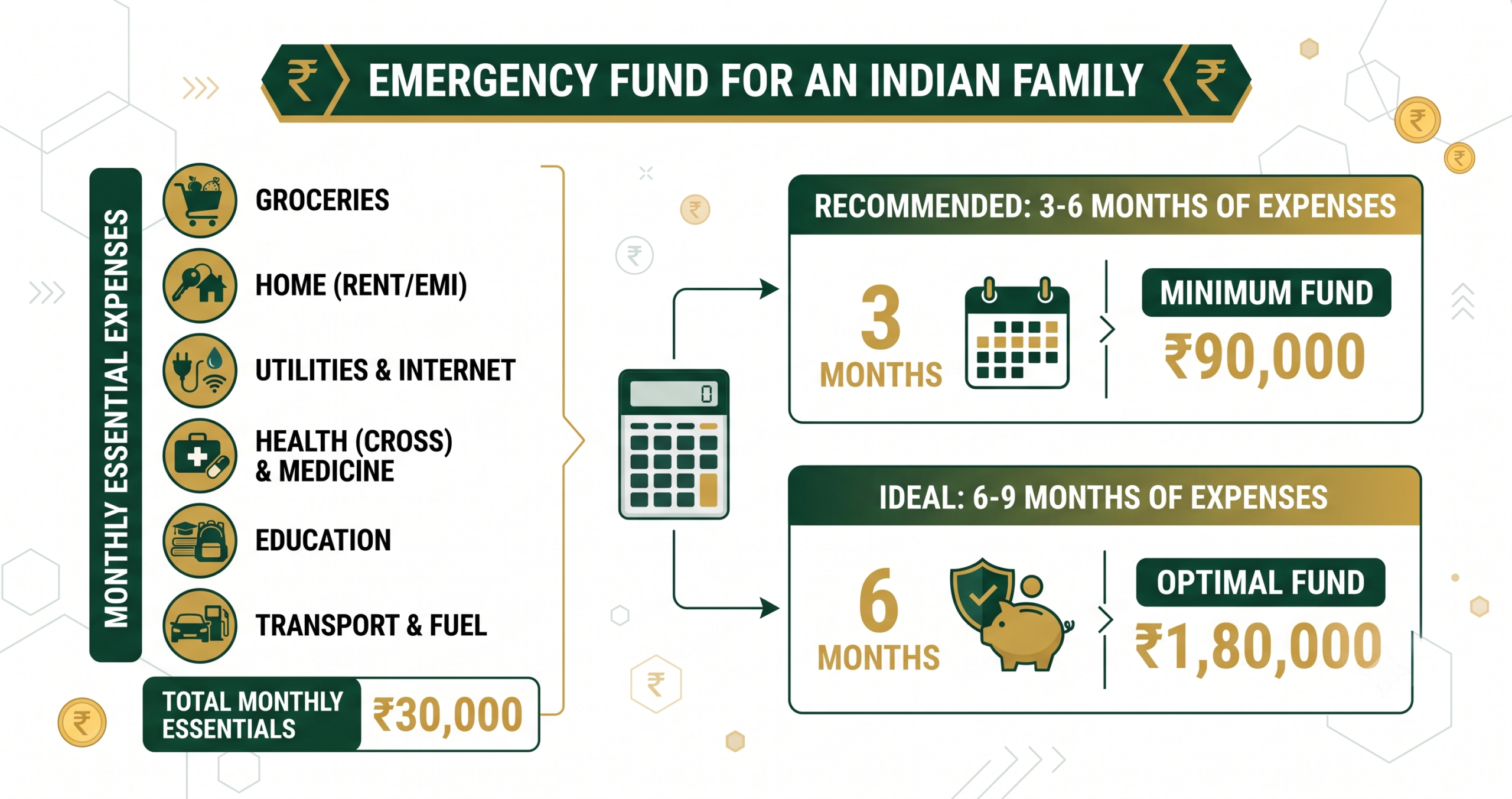
Most financial experts recommend a baseline of 3 to 6 months of essential living expenses. However, this is a broad spectrum. Your specific requirement is determined by your “Life Stability Profile.”
The 3-6-12 Rule for India (2026 Context):
- 3 Months of Expenses: Suitable if you are a single professional with a stable, high-demand job in a recession-proof sector (like core banking or established IT).
- 6 Months of Expenses: The “Gold Standard” for families with dependents (children or elderly parents) or those carrying active home loans. This provides the breathing room needed to handle major life transitions without missing an EMI.
- 9 – 12 Months of Expenses: Essential if you are a freelancer, entrepreneur, or work in a volatile industry (startups, media, or project-based roles) where income is irregular.
The “Essential” Formula
When calculating your target, ignore your lifestyle spending. Do not include your Netflix subscription, weekend dining, or annual vacations. Calculate only the “non-negotiables”:
- Shelter: Rent or home loan EMIs.
- Survival: Groceries, utility bills (electricity, water, internet), and transportation.
- Safety Net: Existing insurance premiums and loan repayments.
- Obligations: School fees for children and regular medication costs for aging parents.
2. Why 2026 Demands More Than “Just Savings”
Many Indians still leave their entire emergency buffer in a standard savings account earning 3%. In 2026, that’s a guaranteed way to lose purchasing power. You need a Hybrid Approach that balances liquidity with growth.
The Best Places to Park Your Buffer:
- High-Yield Savings Accounts (Instant Access): Keep roughly 1-2 months of expenses here. This is your “fire-alarm” money—accessible via UPI or ATM within seconds.
- Liquid Mutual Funds (T+1 Liquidity): These are ideal for the bulk of your fund (3+ months). They offer better returns than savings accounts (typically 6 – 7.5%) and allow redemption within one business day.
- Sweep-in/Flexi Fixed Deposits (FDs): A great way to earn 6 – 7% while maintaining safety. Consider “laddering” your FDs – instead of one large deposit, open several smaller ones. This allows you to break only what you need without losing interest on your entire corpus.
3. The Inflation Factor: The Hidden Threat
Inflation is the “silent thief” of your emergency fund. If your monthly expenses were ₹50,000 in 2024, they are likely higher today due to the cumulative effect of rising food and fuel prices.
- Annual Review: Treat your emergency fund like a living document. Every 6 – 12 months, review your expenses. If your cost of living has risen by 5%, your emergency fund target must rise by 5% as well.
- Medical Inflation: Remember that medical costs are rising at 14%. Your emergency fund should not be your primary healthcare budget (that is the job of your health insurance), but it must be robust enough to cover deductibles, room rent caps, and out-of-pocket costs that insurance often misses.
4. Common Pitfalls to Avoid
Even with the best intentions, families often sabotage their own safety nets.
- The “Investment” Mistake: Never keep your emergency fund in stocks or equity mutual funds. When the market crashes – which is exactly when you might face a job loss – your fund could be down 30%, forcing you to sell at a massive loss.
- The “Borrowing” Trap: Some believe that a credit line or credit card is an emergency fund. Debt is not savings. Using credit as a substitute for an emergency fund forces you to pay exorbitant interest (18 – 36% APR) during your most vulnerable moments.
- “Leakage”: Treating the emergency fund as a secondary piggy bank for planned expenses (like the annual car service or festive shopping) destroys the fund’s utility. If you have predictable, recurring expenses, create a separate “Sinking Fund” for them.
5. Building the Fund: A Realistic Path
Don’t be intimidated by the final number. If your target is ₹6 Lakh, the task seems monumental. Break it down:
- Start with the “Micro-Buffer”: Aim to save ₹25,000 – ₹30,000 first. This covers most minor household repairs or urgent travel needs.
- Automate: Set a standing instruction on your salary day for a fixed amount (e.g., ₹5,000 – ₹10,000) to move to a dedicated “Emergency Only” account.
- Utilize Windfalls: Every bonus, tax refund, or cash gift should go directly into the emergency corpus until you hit your target.
- Replenish: If you use the fund, make it a priority to refill it before restarting discretionary investments.
Final Thoughts: The Emotional Dividend
Financial stability isn’t just about math; it’s about psychology. Knowing that you have 6 months of runway allows you to make rational decisions during a crisis. You aren’t forced to take a bad job out of desperation, you aren’t forced to sell your long-term equity investments, and you aren’t forced to pay 30% interest to a lender.
In 2026, building an emergency fund is the ultimate act of self-care. Start today – not because you expect a disaster, but because you deserve the peace of mind to handle life’s surprises with confidence.
Disclaimer: This article is for informational purposes only and does not constitute financial advice. Market instruments like mutual funds are subject to risks. Please consult with a certified financial planner to assess your specific household needs.