
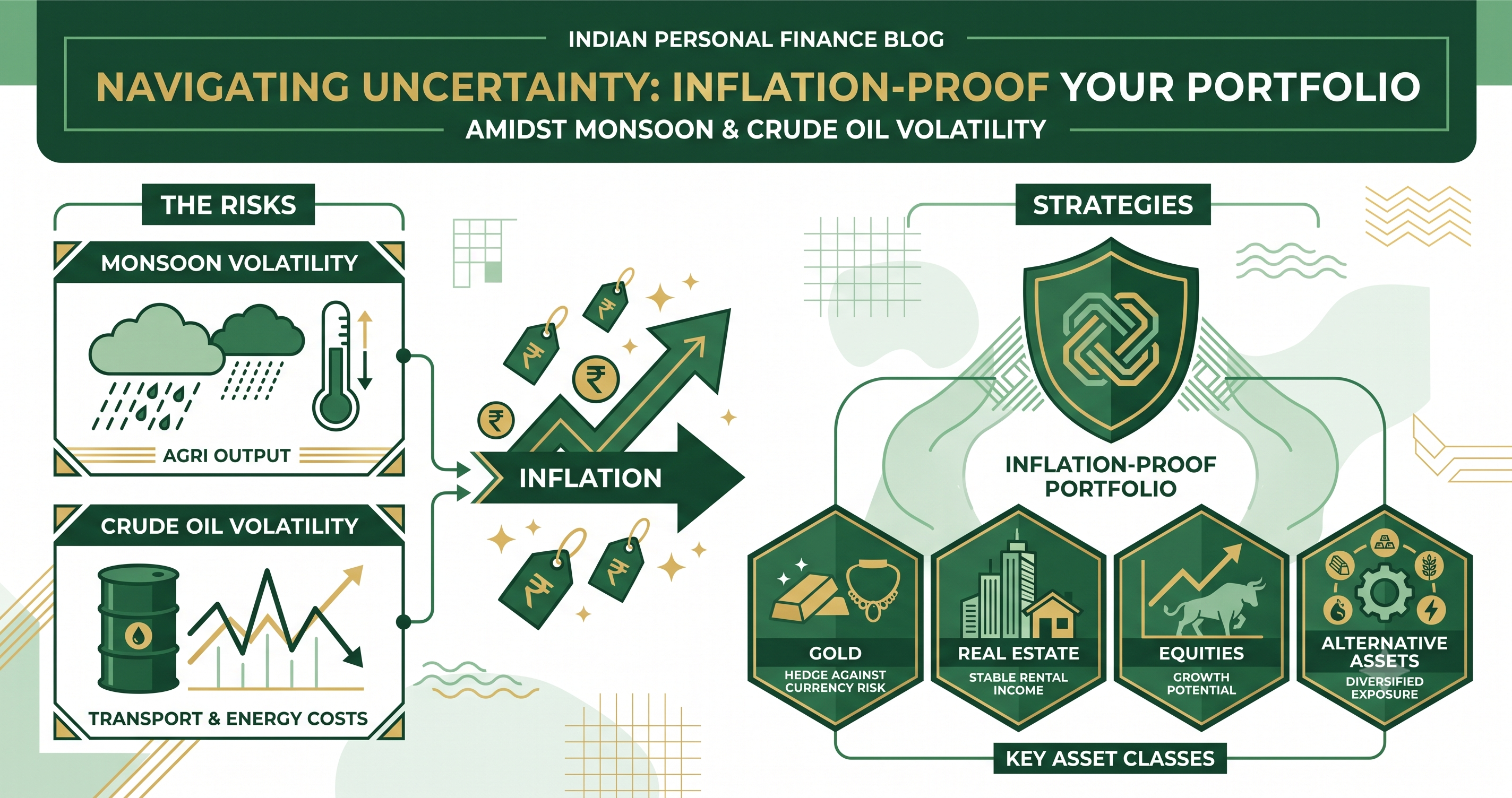
It is late June 2026, and the Indian investor is facing a classic economic “double-whammy.” As we monitor the progress of the southwest monsoon, the India Meteorological Department (IMD) has signaled potential headwinds, with a significant rainfall deficit reported in early June. Simultaneously, global crude oil prices remain sensitive to geopolitical ripples.
For many of us, this creates a natural question: How do we protect our wealth when external factors start putting pressure on domestic prices?
Here is your guide to navigating the current volatility and building an inflation-proof portfolio.
1. Understanding the Current “Inflationary Pulse”
Inflation is often a “stealthy thief,” and right now, it’s being fed by two primary sources:
- The Monsoon Risk: With the IMD noting a rainfall deficit (widening to over 40% in some regions earlier this month), there is valid concern about the Kharif crop harvest. Food inflation is often the first to react, and as history shows, a 10% rain deficit can add up to a full percentage point to headline inflation.
- Energy Costs: While oil prices have shown some respite recently, any volatility in global supply chains affects our import bill, which in turn influences the value of the Rupee and broader market sentiment.
2. The “Pricing Power” Filter
When inflation rises, not all companies are created equal. The best way to inflation-proof your equity portfolio is to focus on Pricing Power.
- Look for businesses that can pass increased costs to the consumer without losing market share.
- Sectors to watch: FMCG and Pharma typically hold up better in inflationary cycles because their demand is inelastic—people still buy toothpaste and medicine regardless of the economic climate.
3. Tactical Asset Allocation for 2026
Don’t rely on a single asset class. A robust portfolio today should look like a balanced ecosystem:
| Asset Class | Role in Your Portfolio |
| Equities | Your primary engine for long-term growth; look for high-quality, large-cap firms. |
| Sovereign Gold Bonds (SGBs) | The ultimate hedge. They protect against currency depreciation and provide a fixed annual interest payout. |
| REITs | A great way to gain exposure to real estate without the liquidity issues of physical property; rental-linked growth is an inherent inflation hedge. |
| Short-Term Debt/Liquid Funds | Maintain a higher liquidity buffer right now. It provides the “dry powder” needed to deploy capital if the markets correct due to negative monsoon headlines. |
4. The “RupeeScout” Approach: Automation and Discipline
The biggest mistake investors make during volatile times is emotional rebalancing.
Instead of panic-selling because of a bad weather report or a headline about Brent crude, use the tools available to you:
- FD Laddering: If you are conservative, spread your investments across fixed deposits with varying maturities. This ensures that a portion of your capital is always becoming available, allowing you to reinvest at higher interest rates if inflation keeps climbing.
- Automated SIPs: Stick to your Systematic Investment Plans. Market volatility is exactly when your SIPs work best, buying more units when prices are low. If you have the technical skills, build a simple script or use a spreadsheet to track your real returns (Nominal Return – Inflation) rather than just the surface-level numbers.
The Bottom Line
Weather patterns and oil prices are “noise” in the short term, but they are critical signals for your long-term strategy. The Indian economy has shown remarkable resilience in the face of global shocks over the last few years.
Don’t let the headlines change your goals. Continue to diversify, prioritize companies with strong pricing power, and keep your emergency fund accessible. Inflation is a challenge, but with a disciplined approach, it is a manageable one.
Disclaimer: This article is for informational purposes only and does not constitute financial advice. Please consult with a certified financial planner before making significant changes to your investment portfolio.